
Indoor Plants to Combat Winter Blues
By: Amy Bradley, Horticulture Technician, EM Pd
After the hustle and bustle of the Holiday Season and a month of negative temperatures many of us are left feeling blue. We are tired, days are often grey and the dark of night is still coming early. Houseplants are a great way to add colour and scent to your home while cleaning the air. The daily or weekly care of plants has the added benefit of engaging us in a task, taking part and completing a routine can be extremely beneficial to mental health.
Here are a few plants that help us to engage in our surroundings, increase air quality and brighten our days.
Quick Pick Me Ups
If you are looking for a quick way to brighten your home, try adding a punch of colour with a blooming plant. Potted Spring bulbs such as Crocus, Daffodils, Hyacinth or Tulips are easy to maintain and will usually last two weeks. Kalanchoe, African Violets, Gerbera Daisies, Cyclamen, Orchid or Primula all have blooms that will last several weeks with the added benefit that they can be grown indoor year-round.
Scent
Plants that add scent to your home have the added benefit of freshening up spaces that can become stale over the winter. Plants such as lavender, rosemary, citrus (small potted lemon or lime trees) all provide calming scents that can aid relaxation and create a peaceful environment.
Clean Air
It has long been known that plants filter air. Removing toxins and refreshing air in homes sealed tight for winter are just other ways that house plants can fight the Winter Blues. Spider Plant, Snake Plant, Monstera or Swiss Cheese Plant, Jade Plant, Golden Pothos, Peace Lily and Philodendron are all plants that have been accredited as great air cleaners for homes.
Fabulous Indoor Blooms
Most house plants are easy to care for and can be added to a weekly routine. All plants require light, moisture and a growing medium to provide nutrients. The following information will help you get the most out of your indoor blooming plants.
Light levels can be tricky to adjust in the winter. Generally, a high light level requiring plant will do best in a south facing window. However, it is important to remember that a southern window will be warmer and plants placed there may need watering daily. Plants that need a medium light level are best in east or west facing windows. Lower light level plants may do well in a northern window or placed further into a room away from the light. If windows do not provide the amount of light needed small grow lights are an excellent way to increase light levels.
Moisture levels can be tricky to regulate, especially with furnaces running constantly over the winter months. Soil, for most plants should be damp but not soggy and there should be no water left standing in the plant saucer. A good quality moisture meter will help you to determine a watering schedule.
Nutrients from the soil get depleted over time. A quick boost for plants is to incorporate a water-soluble fertilizer into your watering routine. Another option is to use a slow-release fertilizer. Whichever option you choose remember to keep the fertilizer on the soil where it can be used and not on the plant where it may burn the blooms or leaves.
Kalanchoe Kalanchoe blossfeldiana is an easy to grow succulent. It does well in medium or indirect light and requires watering every week. A small amount of indoor plant fertilizer once a month will help it maintain thick glossy leaves and stunning flowers.
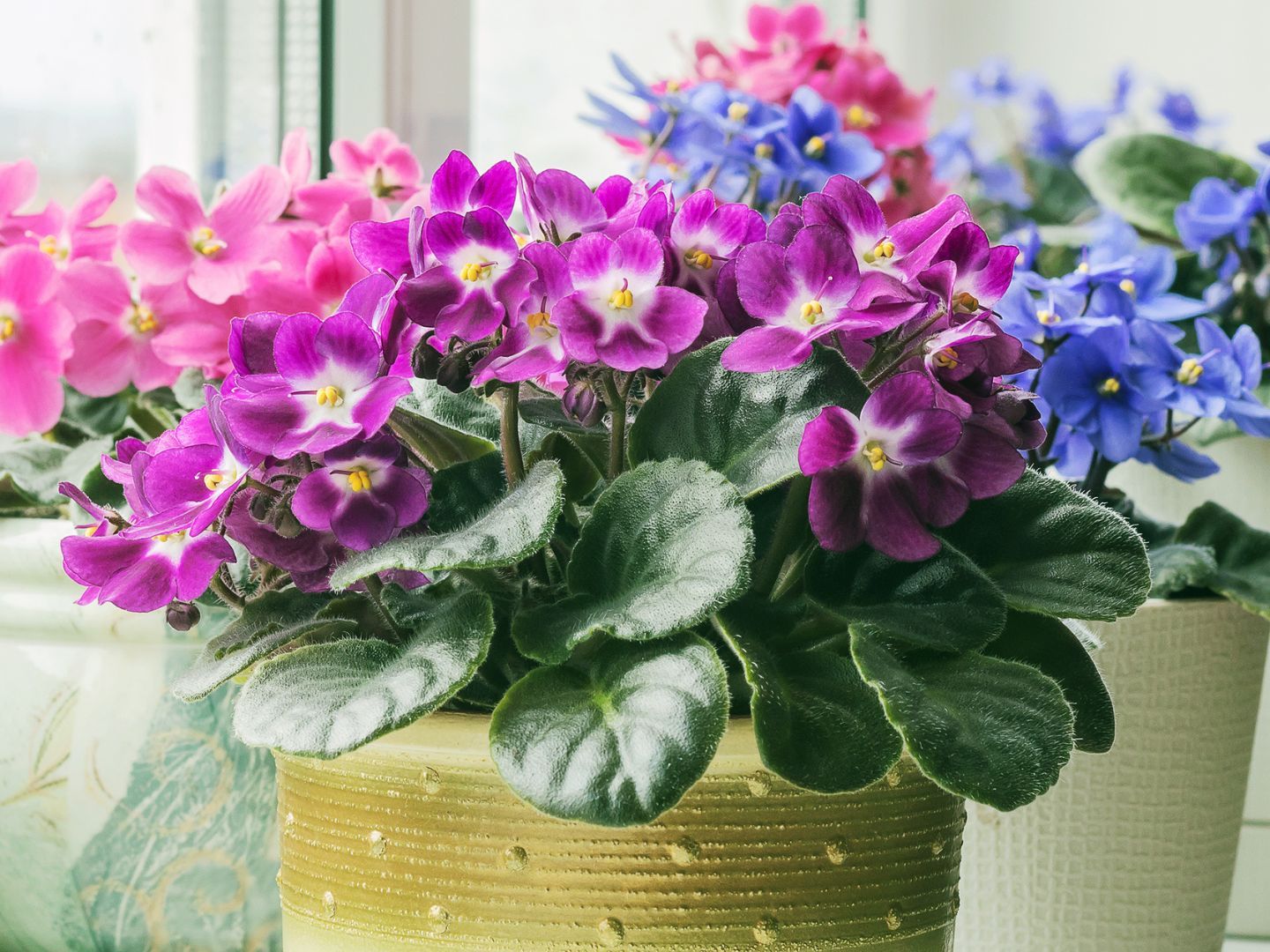
African Violet Streptocarpus ionanthus come in many forms and colours. From mini varieties just a few centimeters across to larger varieties of 30 centimeters across, African Violets do best in indirect light, an east or north facing window is often best. They do require care when watering as over watering or leaving water on their leaves can cause fungus. A good quality African Violet soil will provide nutrients for the plant but a light watering with indoor plant fertilizer every few months will increase blooms.
Gerbera Daisies Gerbera x hybrid provides a big punch of colour and come in a variety of shades of pink, orange, red and yellow. They prefer full sun, so a south or west facing window is best, just remember to water them regularly as they tend to dry out when left in a hot location. A good indoor plant soil and indoor plant food will increase the number of blooms and lengthen the bloom time.
Cyclamen Cyclamen sp grows from a tuber. It has lush green leaves often with silver or light green variegation. Flowers can be a vibrant dark red, pink or purple or soft pastels and white. Cyclamen does best in medium to lower-level light and prefers a cooler growing temperature then many other house plants. Both the flowers and leaves are quick to wilt when the plant gets dry, shortening the length of bloom time. Weekly watering, monthly fertilizing and removal of spent blooms are key to keeping Cyclamen looking their best.
Orchid Orchidaceae sp are grown from rhizomes, corms or tubers and come in an astonishing range of size, colours and bloom forms. The key to a healthy orchid is to use orchid soil and to water it properly. Orchids do best in east or west facing windows of medium light levels. If your house is dry – every other week place the potted orchid in a pan of room temperature water and allow it to sit, absorbing the water for several minutes before moving it back to its location. If your house runs humid watering every three or four weeks is best.
Primula Primula vulgarus, is known for its cheerful blooms and glossy leaves. Good quality potting soil and monthly fertilizing will keep this bright little plant blooming for weeks. Spent flowers should be removed to encourage new growth. Primula do best in a sunny location with well drained soil. A slow-release fertilizer or monthly watering with an indoor plant fertilizer is best for this easy to care for plant.